

Podcast: Reading The Lorax in an Age of Polarization
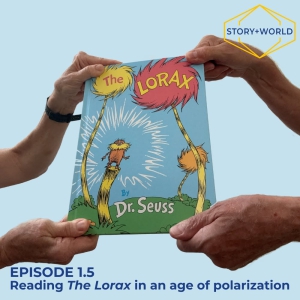
Jack Bobo, Executive Director of the UCLA Rothman Family Institute for Food Studies, joins Jon Christensen, Director of the UCLA Laboratory for Environmental Narrative Strategies (LENS), and Ursula K. Heise, LENS co-founder and UCLA English Professor, to talk about one of the most celebrated—and, Bobo argues, most revealing—works of environmental communication: Dr. Seuss’s The Lorax. A former senior advisor for global food policy at the U.S. State Department and author of Why Smart People Make Bad Food Choices, Bobo reads the 1971 classic through his narrative landscape framework, which identifies three coalitions in environmental and food systems discourse: innovation, sustainability, and sovereignty. The conversation traces how each group finds its own story in the book while missing everyone else’s, a dynamic Bobo calls the “coalition ceiling.” Bobo, Christensen, and Heise discuss polarization as a threat to collective action, and ask how we might communicate across fault lines rather than deepening them. Their conversation takes off from Bobo’s work-in-progress “The Lorax, Coalition Ceilings, and the Paradox of Resonance.”
This podcast episode was published by the Laboratory for Environmental Narrative Strategies. Learn more and listen to this and earlier episodes here.
The podcast of the Laboratory for Environmental Narrative Strategies (LENS), formerly LENS.cast, is now Story+World: Changing Stories for a Changing Planet. They explore environmental art, activism, policy, and imagination in California and beyond. Season 1 is a series of conversations between LENS scholars and writers, artists, scientists, activists, and others whose work relates to LENS’s goal of understanding how today’s environmental challenges connect to longer histories of imagining the natural world.
Music: “Concrete River” by Elori Saxl. Courtesy of Western Vinyl. Used by permission.
Learn more about the Rothman Family Institute for Food.
 Joshua J. Cotten/Unsplash
 UCLA
UCLA