

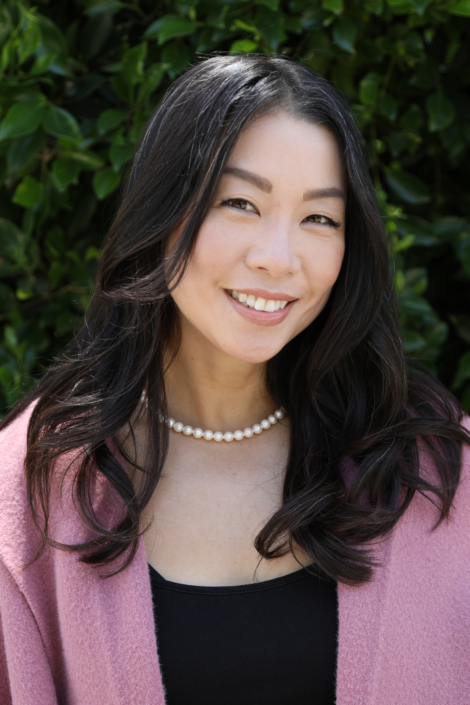
 Courtesy of A. Janet Tomiyama
Q & A: A. Janet Tomiyama’s vision for the Rothman Family Institute for Food Studies
The psychology professor will serve a five-year term as the both the Marcie H. Rothman Faculty Chair of Food Sciences and Faculty Director of the institute
By Kayla McCormack
November 4, 2026
A. Janet Tomiyama has spent the 20 years dedicated to understanding why people make the food choices they do. As a professor of psychology and director of the Diet, Stigma, and Health (DiSH) lab, her research explores questions around weight stigma, comfort eating, plant-based eating and alternative proteins, and food insecurity.
A. Janet Tomiyama
This year, she starts her five-year term as the Marcie H. Rothman Presidential Chair in Food Studies and faculty director of the UCLA Rothman Family Institute for Food Studies. In this new role, she’ll partner closely with RFI Executive Director Jack Bobo, to lead interdisciplinary academic and research efforts.
Learn more about Tomiyama’s strategic vision for RFI in the Q & A below where she discusses how her background in health psychology will help shape RFI’s goals and why interdisciplinary collaboration is essential to addressing the challenges and question facing our complex food system.
Answers have been edited for length and clarity.
In your lab, you explore questions around weight stigma, comfort eating, getting people to eat less meat, and more. How will your research inform your work with RFI?
For more than 20 years, my research has focused on a deceptively simple question: Why do we eat what we eat? What I’ve learned is that food is about so much more than nutrition. It’s deeply intertwined with our identities, our emotions, our relationships, and the social environments in which we live.
For example, my research on plant-based eating shows that people sometimes reject alternative proteins not because of how they taste, but because of what those foods symbolize about their identities and values. In a national study, we found that over 75% of Americans engage in comfort eating, reminding us that eating serves important emotional functions beyond satisfying hunger. And my research on weight stigma demonstrates that shaming people about their weight can actually undermine the very health outcomes we’re trying to improve. My lab has also been funded by the National Institutes of Health to study food insecurity, examining how uncertainty about access to food acts as a chronic stressor that can influence eating behaviors and physiological stress processes.
These findings point to a larger lesson: We can’t solve our most pressing food-related challenges through nutritional science or technological innovation alone. We also need to understand human psychology, culture, and behavior. That’s the perspective I hope to bring to RFI, working alongside scholars from across disciplines to develop solutions that are scientifically sound, and that people can embrace.
Related story: Psychology professor A. Janet Tomiyama appointed the Marcie H. Rothman Presidential Chair in Food Studies
What are some of your goals for your five-year term as RFI faculty director?
My vision is for RFI to become a place where food helps heal some of the divisions and challenges facing our world. I have three overarching goals.
First, I want to use food to bring people together across differences. Food has become politicized, whether we’re talking about cultivated meat, plant-based diets, or what constitutes “healthy” eating. I want RFI to be a leader in understanding how food can build bridges rather than deepen divides. One idea is a signature event called “Food, Fracture, and Repair,” exploring how food can both reflect societal divisions and help us overcome them.
Second, I want RFI to help address structural challenges in our food systems. That means advancing work on sustainable food technologies while also confronting food insecurity and its psychological and physical health consequences. UCLA has extraordinary researchers working on these problems, and I want to help connect their expertise and amplify their impact.
Third, I want to put joy back at the center of food studies. Food is one of life’s great pleasures, and sharing a meal is one of the most universal ways we connect with other people. I want RFI to celebrate that through programming that brings our campus community together, including events that challenge food and body shame and mentoring opportunities that connect undergraduate and graduate food studies students.
Ultimately, I want RFI to be known for the excellence of its research and its ability to bring people together and make a tangible difference in their lives.
Food sits at the intersection of many timely issues—from how weight-loss drugs are changing our views on appetite, to ongoing challenges around food insecurity and stress. What role would you like to see RFI play in these conversations?
One of the most exciting things about food studies is that virtually every major issue surrounding food requires us to think across disciplinary boundaries. GLP-1 medications are a perfect example. They’re transforming our understanding of appetite and weight, but they also raise fascinating questions about identity, stigma, pleasure, and what it means to have a healthy relationship with food. Those aren’t questions that medicine alone can answer.
I want RFI to be a place where these different perspectives come together, where we can have thoughtful conversations about complicated issues without reducing them to simplistic narratives of personal responsibility or good vs. bad foods. Importantly, I also want RFI to help translate those conversations into action. Whether we’re exploring how to make sustainable proteins more appealing, how to address food insecurity, or how to reduce the stigma surrounding weight and eating, RFI can help connect cutting-edge research with the people and communities who stand to benefit from it.
Anything else you’d like to add?
One of the things I love most about food studies is that it brings together people who might otherwise never find themselves in the same room. Psychologists, engineers, historians, chefs, environmental scientists, policymakers, and artists all have something important to contribute to understanding food.
I’m especially excited to build on the extraordinary foundation established by my predecessor, Amy Rowat, and to work closely with RFI Executive Director Jack Bobo. Jack and I share a belief that how we communicate about food can be just as important as the scientific discoveries themselves.
I truly believe that food has the power to heal the world. It can nourish our bodies, bring us together, and help us imagine a healthier, more sustainable future. I can’t think of a more exciting mission for the next five years.
Learn more about the Rothman Family Institute for Food Studies.
 UCLA
 Courtesy of A. Janet Tomiyama